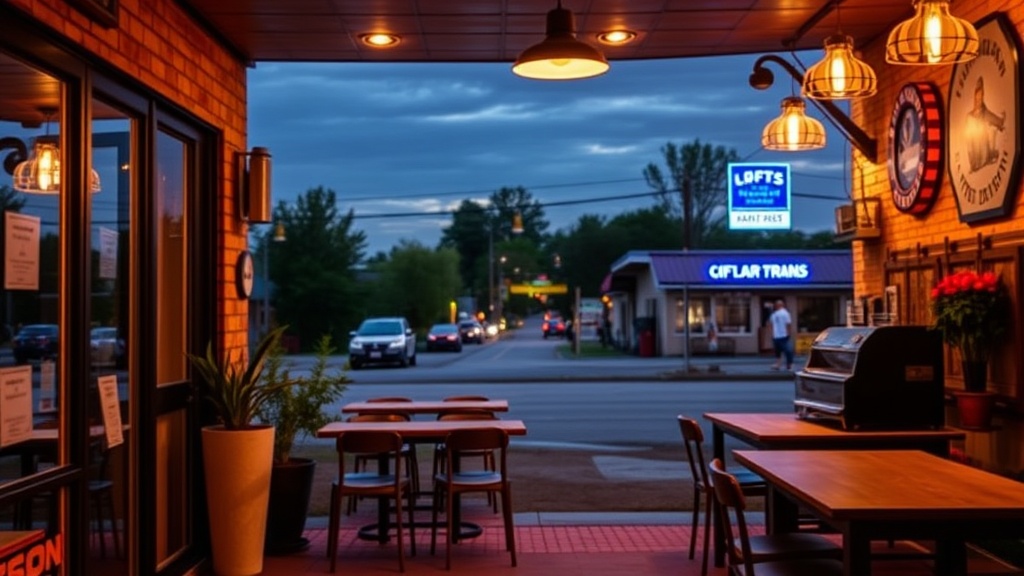
5 Hidden Gem Local Businesses in Wetaskiwin You Need to Know About

The Cornerstone Café – Where Locals Gather for Coffee and Connection
Wetaskiwin Farmers' Market Vendors – Fresh Local Goods Every Weekend
Main Street Vintage – Curated Finds from Alberta's Past
Family-Run Hardware Store – Personalized Service Since the 1980s
The Book Nook – Independent Shop for Readers of All Ages
Wetaskiwin's local business scene runs deeper than the big-box stores along Highway 2A. This post spotlights five under-the-radar establishments that locals rely on—places you won't find in tourist brochures but that keep our community running. Whether you're new to town or you've lived here for decades, these hidden gems deserve a spot on your radar.
What Makes a Business a "Hidden Gem" in Wetaskiwin?
A true hidden gem isn't just small—it's a place that solves real problems for real people. In Wetaskiwin, that often means businesses that understand the rhythm of rural Alberta life: early morning farmers needing parts before dawn, families looking for something better than chain-store quality, hobbyists who'd rather talk shop with someone who actually uses the products they sell.
Here's the thing about our local economy: Wetaskiwin sits at the crossroads of agriculture, oilfield services, and commuter traffic to Edmonton and Red Deer. The businesses that survive here—the ones worth knowing—earn their keep by being genuinely useful. They don't survive on foot traffic alone; they survive on reputation.
Worth noting: this list skips the obvious picks everyone already knows. You don't need another article telling you about the Reynolds-Alberta Museum (though it's fantastic). These are the working businesses—the ones that fix your boots, fill your freezer, or keep your equipment running when it matters.
Where Can You Find Authentic Alberta Beef in Wetaskiwin?
Prairie Meats & Sausage on 50 Avenue sources beef from ranches within 100 kilometres of the city and processes it on-site with recipes that haven't changed in three generations.
Walk through the door and you'll smell the difference immediately—no plastic-wrapped styrofoam here. The display cases hold cuts you won't find at the supermarket: bison pepperoni sticks, locally raised lamb, house-made Ukrainian sausage that tastes like somebody's baba actually made it. The staff know their product. Ask for a shoulder clod versus a chuck roast and you'll get a straight answer about marbling, cooking methods, and which cut works better for slow smoking versus hot grilling.
That said, the real value here is the freezer-filler service. For families who want quality meat without boutique prices, Prairie Meats offers quarter-beef and half-beef packages that break down to roughly half what you'd pay at retail. The catch? You need to plan ahead—the waiting list runs about six weeks during hunting season.
They also do wild game processing for local hunters. Drop off your whitetail or mule deer and they'll turn it into burger, steaks, and sausage with custom spice blends. It's a service that connects directly to how many Wetaskiwin families actually eat—not restaurant-style, but harvest-style.
Who Fixes Work Boots That Actually Last?
Wetaskiwin Shoe Repair on Main Street has been resoling boots, stretching leather, and stitching seams since 1987—and the current owner learned the trade from his father, who ran the shop before him.
Quality work boots run $300 to $500 these days. When the sole separates or the stitching blows out after eight months of hard use, most people assume it's time to buy new. That's expensive thinking. A proper resole costs $65 to $85 and adds another two to three years to a good boot's life. For oilfield workers, farmers, and tradespeople around Wetaskiwin, that math matters.
The shop handles everything from steel-toe rebuilds to heritage boot restoration. Got a pair of Red Wing Iron Rangers that need new heels? They can do it. Vintage Chippewa loggers that need the welt replaced? No problem. They also carry a small inventory of insoles, laces, and weatherproofing products—Obenauf's Heavy Duty LP for leather conditioning, Shoe Goo for quick emergency repairs.
Here's the thing: this business shouldn't exist in 2026. Shoe repair is supposed to be dead. But Wetaskiwin's economy runs on people who wear out work gear fast—and they'd rather support a local craftsman than throw money at disposable footwear. The turnaround time is usually three to four days. During seeding and harvest seasons, call ahead.
Which Local Shop Actually Understands Farming Equipment?
Ag-Plus Parts & Service on Highway 13 isn't a dealership—it's an independent supplier that stocks hard-to-find components for older tractors, combines, and implements that the major dealers stopped supporting years ago.
If you're running a 1980s John Deere 4440 or a Case IH 1660 combine, you already know the problem. Dealerships want to sell you new equipment. When you need a hydraulic cylinder seal kit for a thirty-year-old machine, they shrug. Ag-Plus doesn't shrug. They have shelves of aftermarket and OEM parts for equipment that's been paid off for decades—because in Wetaskiwin's farming community, that equipment still works and still needs to work.
The business started in a garage in 1994. Today it's a 6,000-square-foot warehouse with a machine shop in back. They can fabricate hydraulic hoses while you wait, rebuild cylinders overnight, and source parts for brands that don't even exist anymore. The staff includes two licensed heavy equipment technicians who actually answer the phone and will talk through your problem before you haul equipment in.
Comparison of Ag-Plus versus dealership service:
| Service | Ag-Plus Parts & Service | Major Dealership |
|---|---|---|
| Parts for equipment 20+ years old | Stocked or sourced within 48 hours | Often discontinued, special order only |
| Hydraulic hose fabrication | While-you-wait service | Typically 24-48 hour turnaround |
| Technical phone support | Direct to mechanic, no charge | Service writer intake, diagnostic fee |
| Aftermarket vs. OEM options | Both offered with honest comparison | OEM only |
| Hours during seeding/harvest | Extended hours, on-call emergency | Standard business hours |
Worth noting: they're closed Sundays—unless it's harvest emergency season. Regulars know the after-hours number.
Is There a Real Bookstore Left in Wetaskiwin?
Bound to Please Books & Gifts on 49 Street has survived the Amazon era by becoming something more than a place to buy books—it's a community hub that hosts local author readings, stocks regional history titles you can't find online, and employs staff who read widely enough to make actual recommendations.
The shop carries new and used books in roughly equal measure. The used section is particularly strong on Western Canadian history, agriculture, and outdoor recreation—subjects that matter here. Looking for a detailed history of the Calgary & Edmonton Railway and its impact on central Alberta settlement? They have it. Need field guides to local birds, wildflowers, or geology? There's a whole shelf.
But here's what keeps people coming back: they order anything. Can't find a particular title? They'll track it down, usually within a week, often at a better price than you'll find online once shipping is factored in. No membership required. No app to download. Just a phone call or a conversation at the counter.
The gift side of the business—puzzles, cards, locally made pottery, Alberta-made food products like Sylvan Star Cheese and Chinook Honey—helps pay the rent in an era when book margins are razor-thin. The result is a shop that feels curated rather than corporate. That said, don't expect the coffee-shop atmosphere of big-city indies. This is a working bookstore. The coffee's from a carafe, not a barista, and the seating is limited.
Where Do Local Makers Sell Their Work?
The Makers' Mercantile—tucked into a renovated 1920s building on Main Street—operates as a cooperative where approximately forty local artisans and craftspeople sell pottery, textiles, woodworking, jewelry, and art without the overhead of individual storefronts.
The building itself is worth the visit. Original hardwood floors, pressed tin ceiling, large front windows that flood the space with natural light. The inventory changes constantly—one week you might find hand-turned bowls from a woodworker in Ponoka, the next week a textile artist from Camrose has stocked hand-woven towels and table runners.
What separates this from a typical craft fair? The curation. There's an application process. The work has to meet quality standards, and the artists rotate displays regularly so the shop never goes stale. You'll find functional items—pottery that holds up to daily use, cutting boards that won't warp, wool mittens that actually keep hands warm in January—alongside purely decorative pieces.
The catch? The Mercantile runs on consignment, which means artists set their own prices. Some items cost more than mass-produced equivalents. Some cost less. It depends on the maker's materials, time, and overhead. The staff (mostly volunteers from the cooperative) can tell you exactly who made each item, what techniques they used, and usually something about the artist's background.
For gift shopping—weddings, birthdays, hostess gifts—this shop solves the "what do you get someone who already has everything" problem. You're not just buying a mug; you're buying a mug thrown by Sarah Chen, who fires her work in a wood kiln near Gwynne and uses clay sourced from Medicine Hat. That story matters. It turns a transaction into something more personal.
Wetaskiwin's business space rewards those who look past the obvious. These five establishments—Prairie Meats, the shoe repair shop, Ag-Plus, Bound to Please, and The Makers' Mercantile—represent the kind of local ownership that keeps money circulating in our community rather than draining to corporate headquarters elsewhere. They're not trying to scale. They're not trying to disrupt. They're just trying to do honest work for fair prices—and in Wetaskiwin, that's still a viable way to operate.