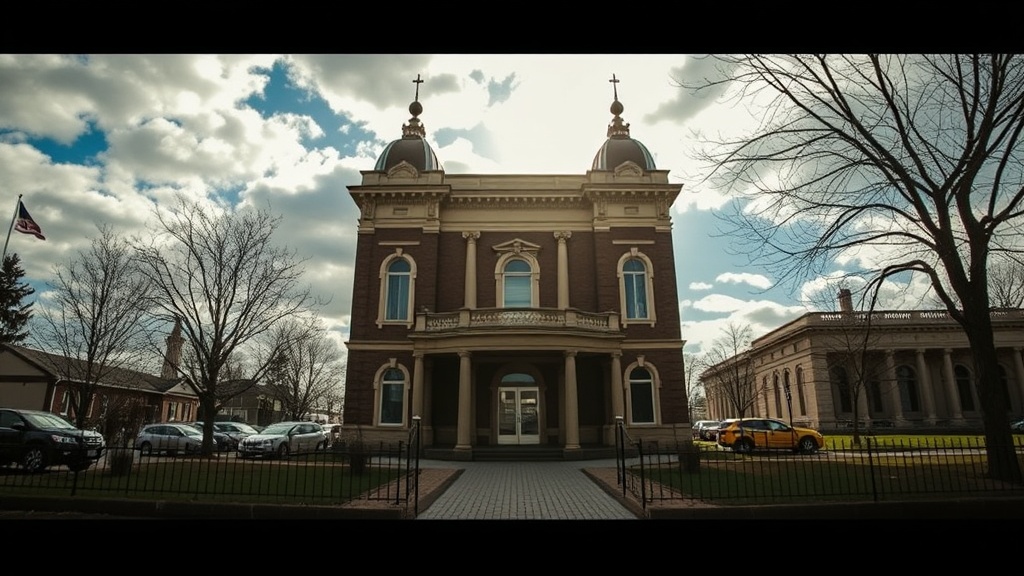
Uncovering Wetaskiwin's Past: A Self-Guided Architectural Journey

What if you could walk through Wetaskiwin and truly feel its history, not just read about it?
Our city, often perceived as a hub of modern activity, holds a fascinating architectural story etched into its very foundations. This isn't just about old buildings; it's about understanding the ambition, resilience, and unique spirit of the people who shaped Wetaskiwin. This guide helps you discover the distinctive architectural styles and significant landmarks that reveal layers of our community's development, offering a fresh perspective on the place we call home.
What Stories Do Wetaskiwin's Buildings Tell?
Wetaskiwin's architectural narrative begins in the late 19th and early 20th centuries, a period of rapid growth spurred by the railway's arrival. Think about it: communities sprang up along those steel tracks, and Wetaskiwin was no exception. What emerged from this boom era was a captivating blend of architectural styles, each building a testament to its time.
You'll notice a prevalence of **Commercial Vernacular** designs, particularly along 50 Avenue—our historic Main Street. These structures were built for practicality, often featuring large storefront windows for display, sturdy brick construction, and minimal, yet deliberate, ornamentation. They were designed to facilitate commerce, and many still do today, albeit housing different businesses. It's a style that speaks to a straightforward, industrious past.
Then there's the influence of **Classical Revival**, evident in more prominent public buildings. These often incorporate elements like symmetrical facades, grand entrances, and decorative motifs inspired by ancient Greek and Roman architecture. They were meant to convey stability, authority, and civic pride—and they certainly achieve that. The choice of materials, frequently locally sourced brick and often a hint of sandstone or decorative metalwork, reflects both available resources and the prevailing tastes of the time.
These buildings aren't just static monuments; they're living archives. They show us how Wetaskiwin adapted, grew, and sometimes struggled. They speak of fire and rebuilding, economic downturns and resurgences, and the continuous evolution of our community's identity. To really 'get' Wetaskiwin, you need to appreciate these silent storytellers.
Where Can You Find Wetaskiwin's Most Enduring Structures?
Alright, let's lace up our walking shoes. Wetaskiwin's historical heart is surprisingly compact, making a self-guided tour both enjoyable and informative. You can pick up a physical brochure from the Wetaskiwin Visitor Information Centre or the Wetaskiwin & District Heritage Museum to guide your steps, but here’s a good starting point:
The Historic Water Tower & Peace Cairn
Begin your journey at a true city icon: the Water Tower (4910-55A Street). Built in 1909, this impressive 42-meter (140-foot) structure isn't just a utilitarian relic; it's one of Canada's oldest municipal water towers and a spectacular piece of engineering for its time. It was meticulously restored in 2006, standing as a proud sentinel over the city. Right next to it, the Peace Cairn, erected in 1927, holds profound significance. It commemorates 60 years of peace between the Nehiyawak (Cree) and Niitsitapi (Blackfoot) Nations, a poignant reminder of the shared history of this land. It’s a powerful place to start, offering both historical depth and a visual anchor for your tour.
Historic City Hall (Old Court House)
A short stroll away brings you to the Historic City Hall (4705-50 Avenue). This National Historic Site, completed in 1909, is a prime example of the Classical Revival style I mentioned earlier. Designed by the same provincial architect, A.M. Jeffers, who envisioned the Alberta Legislature, its stately presence is undeniable. It served as a courthouse for over 70 years before becoming City Hall in 2007. Look closely at the front; you'll spot two German field cannons, captured during WWI and gifted to our city—a fascinating, tangible link to global history right here in Wetaskiwin. You can even pre-book tours of the interior, including the original jail cells in the basement, if you're curious about the justice system of yesteryear. You can learn more about its significance on the